
Hyundai Creta: Seats / Rear seats
Headrest
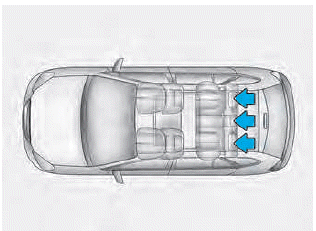
The rear seats are equipped with headrests in all the seating positions for the occupant's safety and comfort.
The headrest not only provides comfort for passengers, but also helps to protect the head and neck in the event of a collision.
WARNING
To reduce the risk of serious injury or death in an accident, take the following precautions when adjusting your headrests:
- Always properly adjust the headrests for all passengers BEFORE starting the vehicle.
- NEVER let anyone ride in a seat with the headrests removed.
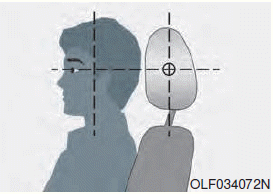
Adjust the headrests so the middle of the headrests is at the same height as the height of the top of the eyes.- NEVER adjust the headrest position of the driver’s seat when the vehicle is in motion.
- Adjust the headrest as close to the passenger’s head as possible. Do not use a seat cushion that holds the body away from the seatback.
- Make sure the headrest locks into position after adjusting it.
NOTICE
To prevent damage, NEVER hit or pull on the headrests.
Adjusting the height up and down
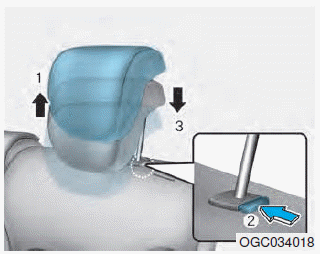
To raise the headrest, pull it up (1). To lower the headrest, push and hold the release button (2) on the headrest support and lower the headrest (3).
Removal
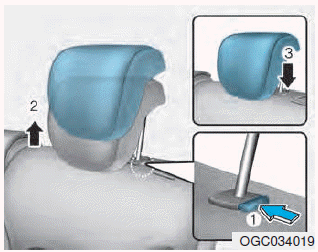
To remove the headrest, raise it as far as it can go then press the release button (1) while pulling upward (2).
To reinstall the headrest, put the headrest poles (3) into the holes while pressing the release button (1). Then adjust it to the appropriate height.
WARNING
Make sure the headrest locks in position after adjusting it to properly protect the occupants.
WARNING
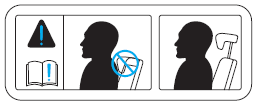
- For maximum effectiveness in case of an accident, the headrest should be adjusted so the middle of the headrest is at the same height as the center of gravity of an occupant's head.
- Do not operate the vehicle with the headrests removed. Severe injury to an occupant may occur in the event of an accident. Headrests may provide protection against severe neck injuries when properly adjusted.
Folding the rear seat
The rear seatbacks (or cushions) may be folded to facilitate carrying long items or to increase the luggage capacity of the vehicle.
WARNING
- Never allow passengers to sit on top of the folded down seatback while the vehicle is moving as this is not a proper seating position and no seat belts are available for use. This could result in serious injury or death in case of an accident or sudden stop.
- Objects carried on the folded down seatback should not extend higher than the top of the front seats. This could allow cargo to slide forward and cause injury or damage during sudden stops.
Type A
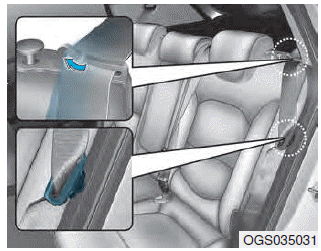
1. Set the front seatback to the upright position and if necessary, slide the front seat forward.
2. Insert the rear lap/shoulder belt plate into the holder on the seat and side trim. It will prevent the lap/shoulder belt from interfering with the seatback when folding.
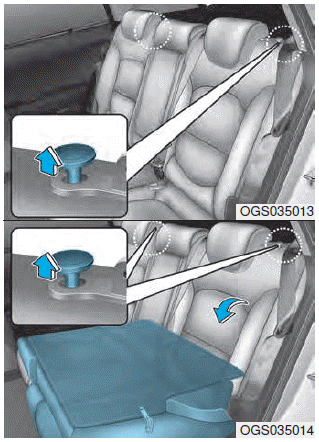
3. Pull up both sides of the seatback lever and fold the seatback toward the front of the vehicle.
To use the rear seat, lift and push up the seatback backward. Push the seatback firmly until it clicks into place. Make sure the seatback is locked in place.
When returning the rear seatbacks to the upright position, remember to return the rear shoulder belts to their proper position.
Type B
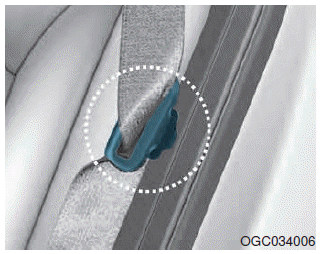
1. Insert the rear seat belt webbing in the guide to prevent the seat belt from being damaged.
2. Set the front seatback to the upright position and if necessary, slide the front seat forward.
3. Lower the rear headrests to the lowest position.
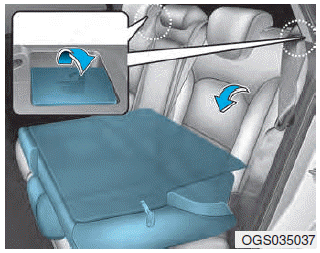
4. Pull up the seatback lever, then fold the seat toward the front of the vehicle.
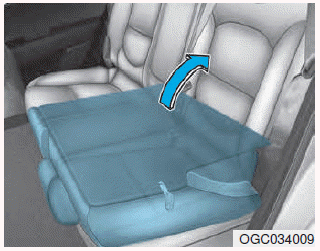
5. To use the rear seat, lift and push up the seatback backward. Push the seatback firmly until it clicks into place. Make sure the seatback is locked in place.
When returning the rear seatbacks to the upright position, remember to return the rear shoulder belts to their proper position.
WARNING
When you return the rear seatback to its upright position after being folded down:
Be careful not to damage the seat belt webbing or buckle. Do not allow the seat belt webbing or buckle to get caught or pinched in the rear seat. Ensure that the seatback is completely locked into its upright position by pushing on the top of the seatback. Otherwise, in an accident or sudden stop, the seat could fold down and allow cargo to enter the passenger compartment, which could result in serious injury or death.
NOTICE
- When returning the rear seatbacks to the upright position, remember to return the rear shoulder belts to their proper position.
- Routing the seat belt webbing through the rear seat belt guides will help keep the seat belts from being trapped behind or under the seats.
WARNING
Cargo
Cargo should always be secured to prevent it from being thrown about the vehicle in a collision and causing injury to the vehicle occupants. Do not place objects in the rear seats, since they cannot be properly secured and may hit the front seat occupants in a collision.
WARNING
Cargo loading
Make sure the engine is off, the manual transaxle is in R (Reverse) or 1st, and the parking brake is securely applied whenever loading or unloading cargo. Failure to take these steps may allow the vehicle to move if the shift lever is inadvertently moved to another position.
 Front seats
Manual adjustment
Forward and rearward
â– Type A
â– Type B
To move the seat forward or rearward:
1. Pull the seat slide adjustment
lever up and hold it.
2. Slide the seat to the position ...
 Seat belts
WARNING
For maximum restraint system
protection, the seat belts must
always be used whenever the
car is moving.
Seat belts are most effective
when seatbacks are in the
upright pos ...
Other information:
Hyundai Creta GS 2014-2019 Service Manual: Transaxle Control Module (TCM)
Description and operation
Description
•
Monitoring the vehicle's operating conditions to determine the optimal
gear setting.
•
Performing a gear change if the current gear setting differs from the
identified optimal g ...
Hyundai Creta GS 2014-2019 Owners Manual: Remote key
Your HYUNDAI uses a remote key,
which you can use to lock or unlock
a door (and tailgate) and even start
the engine.
1. Door Lock
2. Door Unlock
3. Tailgate Unlock
Locking
To lock:
1. Close all doors, engine hood and
tailgate.
2. Press the Door Lock button (1) on
the remote key. ...
