
Hyundai Creta: Air Conditioning System / Condenser
Components and components location
| Components Location |
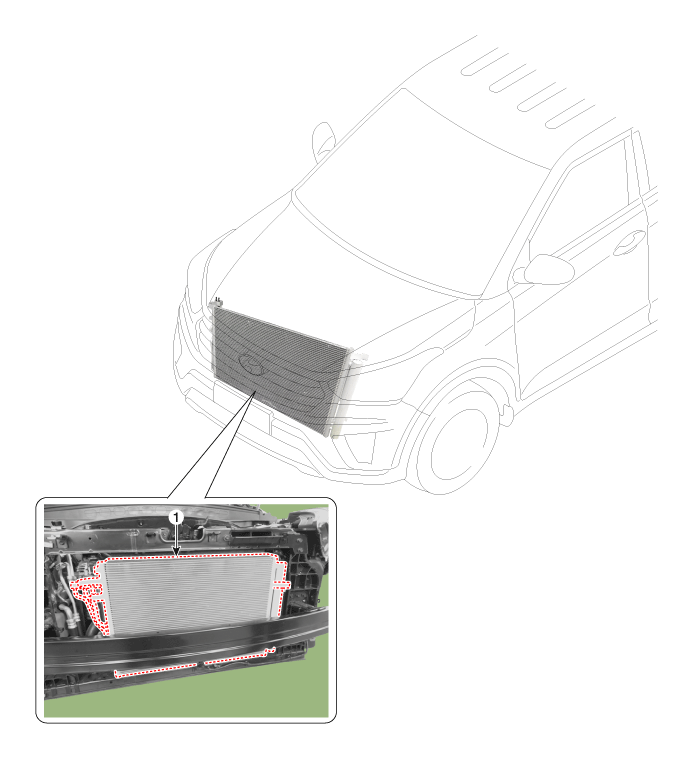
| 1. Condenser |
Repair procedures
| Inspection |
| 1. |
Check the condenser fins for clogging and damage. If they are clogged,
clean them with water, and blow them with compressed air. If they are
bent, gently bend them using a screwdriver or pliers.
|
| 2. |
Check the condenser connections for leakage, and repair or replace it,
if required.
|
| Replacement |
| 1. |
Recover the refrigerant with a recovery/ recycling/ charging station.
|
| 2. |
Disconnect the negative (-) battery terminal.
|
| 3. |
Remove the front bumper.
(Refer to Body - "Front Bumper Cover")
|
| 4. |
Remove the horn.
(Refer to Body Electrical System - "Horn")
|
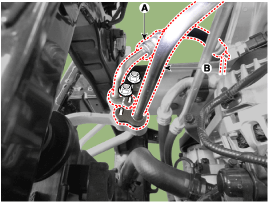
| 5. |
Remove the 2 nuts, and then disconnect the discharge line (A) and liquid
line (B) from the condenser.
|
| 6. |
Remove the air guard (A).
|
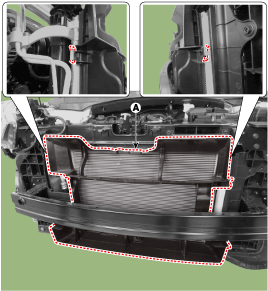
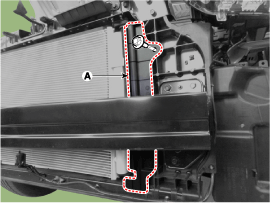
| 7. |
After loosening the mounting bolts, then remove the side air guard (A).
[LH]
[RH]
|
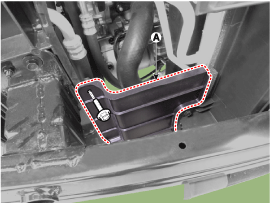
| 8. |
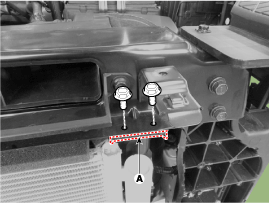
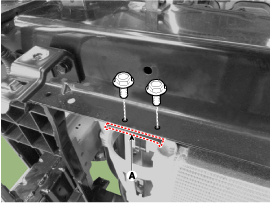
Loosen the mounting bolts and then remove the radiator mounting bracket
(A).
|
| 9. |
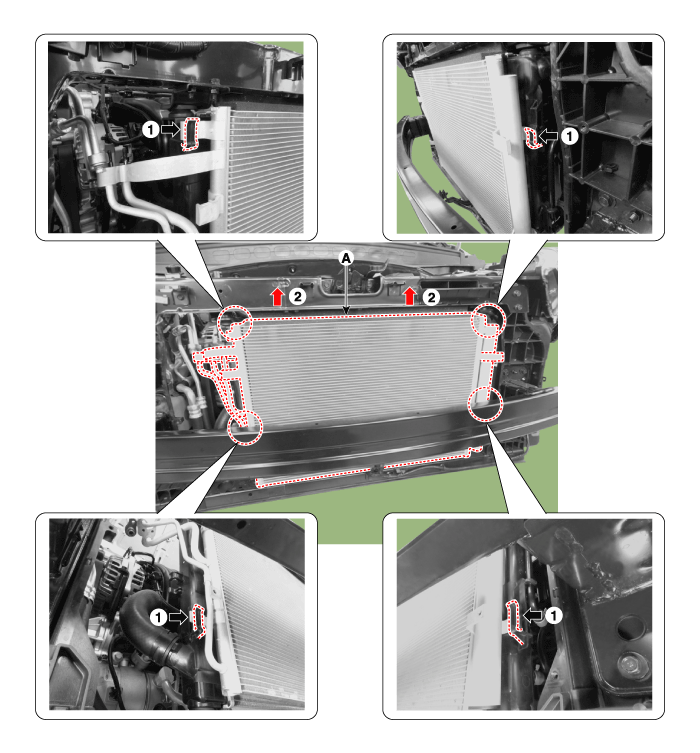
Remove the condenser (A) from radiator.
|
| 10. |
Install in the reverse order of removal.
|

 Compressor
Description and operation
Description
The compressor is the power unit of the A/C system.
It is located on the side of engine block and driven by a V-belt of the engine.
The c ...
Other information:
Hyundai Creta GS 2014-2019 Service Manual: Specifications
Specifications
Item
Specifications
Transaxle type
A6GF1
Engine type
Gasoline 1.6MPI
Torque converter type
3-element, 1-stage, 2-phase type
Torque converter ...
Hyundai Creta GS 2014-2019 Owners Manual: Curtain air bag
The actual air bags in the vehicle may differ
from the illustration.
Curtain air bags are located along
both sides of the roof rails above the
front and rear doors.
They are designed to help protect
the heads of the front seat occupants
and the rear outboard seat occupants
in certain ...
© 2017-2026 www.hcrmangs.com
